k8mante
Collaborative Consumption and the Sharing Economy: the Grassroots Efforts of the Sustainable Fashion Community Center

Clothing is more than functional. Our clothes tell our story. They offer clues about our personality and reflect the image we see in ourselves. They can symbolize our values, share our secrets, give us confidence to go out into the world, send silent messages, and even communicate rebellion or solidarity with others. Our clothes are an integral part of our identity, our self-image, our psyche.
Yet at the same time, the current mainstream clothing textile industry is neither sustainable nor future-oriented. Fashion is part of a linear economy that uses resources to make goods to be sold solely for profit, then disposes of anything not needed, from manufacturing scraps, materials and dyes… to the end product. The rise of “fast fashion” by brands such as Shein, Primark, and others, create profit margins by reducing costs (cheaper fabrics and quality) and speeding up production time, which can mean cutting environmental corners and unjust labor practices. In addition, the majority of the fashion industry pushes clothing designed to be replaced seasonally with updated fashion trends. Ultimately, the raw materials, and end products, end up burned or in the garbage dump. Wasted resources polluting our planet and adding to the environmental crises.

According to research by the American Chemical Society, since the 2000s, fashion production has doubled and it will likely triple by 2050. (1) The production of polyester, used for cheap and fast fashion, as well as athleisure wear, has increased nine-fold in the last 50 years(2). Because some clothing lines have become so cheap, consumers find it easy to discard items after being worn only a few times. One survey found that 20 percent of clothing in the US is never worn.(3) A study by Grow NYC found the average New Yorker tosses 46 pounds of clothing and other textiles in the trash each year, at a cost to taxpayers and our environment.(4)
Overall, the Fashion Industry is responsible for 10 percent of human-caused greenhouse gas emissions and 20 percent of global wastewater, using more energy than the aviation and shipping sectors combined.(5)
Sounds grim, right? Luckily, things are slowly changing. Many reputable brands are starting to take sustainability seriously and are making efforts to improve production methods. And there are tons of local grassroots efforts popping up across the country that focus on new methods of managing production, sale and use of textile and clothing.
The Sustainable Fashion Community Center (SFCC) in East Harlem is one of a growing group of these grassroots organizations offering a solution. A clothing swap shop, member-led pop-up, educational center, and clothing recycling center, the SFCC is a hive of activity within the vibrant East Harlem neighborhood.

Shoppers can shop in one of three ways – they can pay a $15 fee for 10 items, they can swap clothing items 1 to 1, or they can purchase items at bargain prices during shop days. I happened to be volunteering on a shop day when everything in the store was $1.

Teams of volunteers work 3-hour shifts of sorting, hanging, organizing, and general housekeeping activities. As a thank you, volunteers can “straight-swap” up to 10 pieces (meaning swap out items you bring for new-to-you items you take from the store). On any given day, handfuls of volunteers keep the store stocked and check in new items.

The SFCC is an example of collaborative consumption, a socio-economic model which focuses on sharing access to products with the goal of increasing usage of unwanted or underutilized products. The sharing economy is an alternative to the contemporary marketplace, focusing on reducing new product acquisition, increasing product reuse, and extending product lifecycle.
The SFCC also hosts pop-up clothing swaps , in person and virtual workshops, has an educational program, and has a clothing recycling program where items donated but not sellable are gathered, weighed, and picked up by NYC as part of their clothing recycling program.
Designer items and brand-new items are sold on PoshMark to raise funds to run the SFCC, and they collect used sneakers for recycling and use by other non-profits who send shoes to the needy in the US and other countries.
On the day I volunteered, there were many clients in and out of the space, enjoying perusing the racks and chatting with Founder, Andrea Reyes, who is a fountain of knowledge about sustainable fashion. Her passion is inspiring from the moment you enter the door.

The second-hand clothing culture is designed for intimate interaction with the clothes and the community and the SFCC is fully immersed in providing a special client experience. It promotes a unique emotional connection to textiles, where participants first experience an emotional release from cleaning out and decluttering their closets, knowing that by doing so they are helping bring others joy and are helping the environment.

The store itself is welcoming and designed for touch, try on, and conversation. There is a strong blend of somatic and emotional experiences as shoppers are encouraged to touch the fabrics and try on items, play dress up, and try new styles outside of their comfort zone.
There’s also a practical piece – monetary benefits of swapping out high-quality clothes you no longer wear for new-to-you wardrobe items. And Andrea ensures the experience is a positive one, reminding shoppers they are preventing clothing from going to the landfill and that they are reducing consumption of virgin resources by participating in the swap.

Many of the clients were repeat clients. One shopper said they loved the positive moral feeling – that they were reducing environmental pollution and they loved finding vintage and unusual items to add to their closet.
Swapping, in a way, helps people understand the benefits of the art of letting go and decluttering, while also helping them reflect on our capitalistic society’s psychological want to continuously acquire more. It expands perspectives around certain aspects of capitalism.
I also spoke with first-time shoppers curious about the uniqueness of the experience. One younger shopper loved the idea of engaging in anti-consumption, counter-cultural, behavior where consumers become both the supplier and the consumer.
Andrea spoke of the circular economy grassroots efforts like the SFCC promote – where the earth is understood as a vulnerable system with limited natural resources, and thus the importance of using as few raw materials as possible. An endless cycle of reuse and recycling for the benefit of all – keeping the value of raw materials and produced goods as high as possible for as long as possible.
It is an inspiring message and exchanging clothing extends the life of the item over and over again.

A study by Wrap (UK) found that when you decide to extend the life of your clothing for just nine months, you cause a 25-30% reduction of your water and carbon footprint and have other positive environmental impacts.(6) The SFCC, and organizations like it, is transforming the contemporary fashion marketplace model and people’s relationships with the products, as well as reshaping what consumers demand from brands (sustainable, environmentally low-impact clothing).
I traded in several items in an effort to reduce the amount of clothing I’ve collected in my closet, and traded it all in for a blouse I fell in love with on sight!

Want to learn more about the Sustainable Fashion Community Center? Check out their website through the NYC Fair Trade Coalition at: https://nycftc.com/
Looking to get involved in the collaborative consumption culture? You can buy new-to-you and upcycled clothing on websites such as Etsy and PoshMark, and by shopping at vintage clothing stores, swap shops and even local government-agency and/or non-profit-run used clothing stores (Goodwill, etc.).
Want to get involved hyper-locally? Why not set up a clothing swap or fashion exchange with a group of friends or at your local school (children’s clothes are PERFECT for swapping). Not sure how to host one? I’ve put together some simple instructions here: https://52weeksofcharity.blog/2023/03/08/3920/
If you shop new-to-you clothing, share some photos with me and share your story. I’d love to hear about it!
Sources for Citations:
- Cho, R. (2021, June 10). Why Fashion Needs to be More Sustainable. Columbia Climate School. Retrieved March 8, 2023, from https://news.climate.columbia.edu/2021/06/10/why-fashion-needs-to-be-more-sustainable
- (2023, February 9). Production of Polyester Fibers Worldwide from 1975 to 2021. Statista.com. Retrieved March 8, 2023, from https://www.statista.com/statistics/912301/polyester-fiber-production-worldwide/#:~:text=In%202021%2C%20global%20polyester%20fiber,of%20polyester%20fibers%20produced%20worldwide.
- Golembewski, V. (2014, April 4). Most Women Own HOW Much In Unworn Clothing? Refinery 29. Retrieved March 8, 2023, from https://www.refinery29.com/en-us/2014/04/65713/unworn-clothing-study(n.d.).
- Clothing is Not Garbage. Grow NYC. Retrieved March 8, 2023, from https://www.grownyc.org/clothing
- Cho, R. (2021, June 10). Why Fashion Needs to be More Sustainable. Columbia Climate School. Retrieved March 8, 2023, from https://news.climate.columbia.edu/2021/06/10/why-fashion-needs-to-be-more-sustainable
- (2017, July 17). Valuing our clothes: The Cost of UK Fashion. Wrap. Retrieved March 8, 2023, from https://wrap.org.uk/sites/default/files/2020-10/WRAP-valuing-our-clothes-the-cost-of-uk-fashion_WRAP.pdf
Textile Recycling – FabScrap Focuses on a Sustainable Future
I emerged from the 59th St. Subway station in Sunset Park, Brooklyn into a vibrant, energetic neighborhood. Blocks of 3-5 story, multi-tenant, walk-up brick apartment buildings lined the streets, many with small Asian or Hispanic shops, bakeries, and restaurants on the first level. A happy, multi-lingual chatter of families filled the air as parents escorted their children to morning drop-off at local elementary school PS 503/506.
Crossing 3rd Avenue, the sky was blocked by the elevated Gowanus Expressway. I could hear the muffled rumbling of traffic overhead. Busy delivery trucks and taxis carefully made their way up 3rd, dodging construction teams working on the underside of the Gowanus.
I was headed to volunteer with FabScrap – New York City’s largest fashion recycling organization – whose goal is to help end commercial textile waste by recycling waste generated during pre-production and production of consumer products.
Located in the Brooklyn Army Terminal, FabScrap works with teams of volunteers to help sort and recycle over 2,000 pounds of fabric a week – keeping it out of landfills.

The Brooklyn Army Terminal is tucked against the edge of the community, along the NY Bay. During WWII it was the United States’ largest military supply base, a sprawling complex of two enormous warehouses and a spattering of other buildings, spanning 6 blocks, 9 floors, and 55 acres. The warehouses themselves completely dwarf the buildings in the surrounding neighborhood. Today, the complex is used for commercial and light industrial/manufacturing use, artist studios, and maker-spaces.

FabScrap is in Building B, at the far end of a long internal atrium that once was a busy hub for weapons and supplies, but now seems weary and out of place and time. The metal frame of a once-glass-ceilinged dome sits rusting to the elements and open to the sky. An old, WWII-era train sits decomposing on moss-covered rusty rails leading up either side of the atrium. Dozens of cantilevered concrete ledges run up and along both sides. Each ledge buts up against metal garage door entrances, some long defunct. Large, chicken-wire frosted windows line each floor.
This morning was grey and drizzling and stepping into the atrium I took in a sharp, deep, breath. I felt as if I had entered an apocalyptic dystopian movie set. The air felt weary. A musty smell and the sound of the drizzle on sets of metal chairs and tables added to the chill.
Hidden beyond the atrium are over three million square feet of renovated space. The Terminal is a highly functioning industrial complex that houses over 100 businesses and 4,000+ good manufacturing jobs!

On the far side across the atrium, up on the 5th floor, FabScrap takes in more fabric than it can process most weeks (up to 3,000 – 5,000 pounds). They work with well over 400 NYC clothing labels, designers, furniture companies, and costume studios to help recycle their manufacturing waste (642 brands between NY and their second location in Philly).
FabScrap provides these companies color-coded canvas bags into which excess fabrics are placed (brown for general waste and black for proprietary fabrics the brand indicates cannot be resold or reused). This can be fabric swatches they no longer need, or fabric scraps from making sample items. Sometimes clients send damaged or unfinished samples as well. Clients leave the paper/cardboard headers, tags, and stickers still attached so FabScrap can identify the type and composition of the fabric.

FabScrap charges a small, tax-deductible pickup fee and provides empty bags at every pickup. The bags are brought back to the warehouse for sorting and recycling by teams of volunteers. This morning the volunteers were a mix of artists, quilters, regular citizens, and students from FIT – whose programs mandate a certain number of hours volunteering so students are introduced to the often-unseen side of textile production.

Each volunteer had a table for sorting, surrounded by bins labeled for each type of material. Our job was to pull apart bundles of fabric then remove paper, pins, stickers, and staples, and sort the fabric into the bins.
It is a very manual, time-consuming, and tedious process and up to 11 volunteers help during any 3-hour session.
Behind us, across the length of the warehouse room, was a floor-to-ceiling hill of pristine textiles in trash bags, waiting to be sorted.

After sorting, the fabric has a variety of end uses. Proprietary material and small scraps are shredded to create a colorful pulp called shoddy, which will be used to create insulation, carpet padding, furniture lining and moving blankets. Non-proprietary material is used by students, artists, crafters, quilters, sewers, teachers, and even other clothing designers who focus on eco-wear.
How much commercial textile waste is generated each year in NYC alone? It’s hard to say as there is no current industry model for tracking and laws in most states are non-existent. NYC has passed a regulation that all businesses are required to recycle textiles if textiles are over 10% of the business’ waste.
According to Grow NYC, the average New Yorker tosses 46 pounds of clothing and other textiles in the trash each year. All told, that’s almost 200,000 tons of textiles every year.(1) It is estimated that commercial textile waste could be as high as 40x consumer/residential waste.
Designers have difficulty recycling their textile waste. There is a lack of recycling options, recycling partners, and infrastructure, and commercial fabric scraps do not fit into the current resell-at-thrift or donation models. FabScrap steps into this space to help NYC designers and brands recycle their waste.

They also provide each company an “Impact Report,” which includes the end use of all sorted materials, the total weight diverted from the landfill, and the overall environmental impact. FabScrap has another warehouse location in Philadelphia which they launched in 2021.
According to Fabscrap’s annual report from 2021, they saved 305,977 pounds of fabric, 90% of which was recycled or reused and only 3% ended up in a landfill. They saved over 1,400 tons of CO2 emissions – the equivalent of planting over 20,000 trees.(2)
After each 3-hour shift, volunteers are able to choose and take home up to 5 pounds of material for free, either from their own sorting piles or from the large fabric recycle room. There were so many choices it took a solid hour for me to decide what I wanted!

In the end I took home materials to make two throw pillows for my couch – and a great experience and story to share with others! On my subway ride back to Manhattan, I thought about fast fashion and how often I’ve “cleaned my closet” by tossing clothes. While I tend to donate ones in good condition, I had been throwing away certain well-worn items. I think I’ll be trying to figure out how to reuse the fabric instead for potholders, to make fabric-rope baskets, maybe for quilting… What would you do with your unwanted clothing going forward? Send me some suggestions!
References:
Preserving History through Digital Transcription
Volunteering with the Smithsonian Digital Transcription Center was an interesting and educational experience that allowed me to help preserve historical records. The Smithsonian created this program so volunteers, called “volunpeers,” can work together to transcribe handwritten documents into searchable digital text. Since the program began in 2013, volunteers have helped transcribe over a million pages of materials, including field notes, diaries, manuscripts, photo albums, and specimen labels.
One aspect I enjoyed about this activity was the ability to choose projects that matched my interests. The website offers general categories such as mysteries of the universe, women’s history, and world cultures, as well as projects connected to specific Smithsonian museums and archives, such as the National Portrait Gallery and the Archives of American Art. There is also a “new projects” section where volunteers can find recently added materials to work on.

I carefully read handwritten historical documents and typed the text into a digital format. Before starting you have to watch a tutorial that trains you on the specific process to follow.
The activity required patience and attention to detail because older handwriting can sometimes be difficult to read. It was fun to think that my contributions could help make these historical materials easier for researchers, students, and the public to access in the future. After transcription, other volunteers reviewed the work to make sure the text was correct. Peer review!

What I enjoyed most about volunteering with the Smithsonian Digital Transcription Center was the opportunity to interact with real historical materials. There were many really interesting documents to look through. It felt like stepping into the past and helping preserve stories that might otherwise remain difficult to access.
I also appreciated that this work allowed me to do the activity from anywhere and contribute to museums and archives. It is a great activity to de-stress and it’s easy to fit it into busy lives.
This experience helped me understand how technology and teamwork can protect important pieces of history. By participating in digital transcription, I contributed to preserving knowledge and making it available to a wider audience.
Volunteering with the Smithsonian inspired me to value historical preservation and recognize the importance of making information accessible for future generations.
Interested in transcribing? Check out:
Fighting Nursing Home Loneliness through Caring by Cards
For Seniors living in Nursing Homes, the experience can be both comforting and isolating.

Residents with health conditions who require daily oversight or medical care may need a skilled nursing facility, and there can be advantages to a Nursing Home such as providing physical safety and 24-hour access to trained physicians.
In some cases, nursing homes can provide seniors with a sense of community and engagement, helping provide cognitive stimulation, physical exercise, and daily connection to friends.
However, living in a nursing home can also be very challenging for residents.
Residents have been uprooted from the familiarity and comfort of their personal homes. They often feel a sense of loss from that. They may have been placed in a home far from family who cannot visit often and so they feel isolated or may not have the level of interaction with loved ones they had in the past. Dementia patients have a hard time adjusting to new, unfamiliar environments and so can become stressed and angry. Residents must also adjust to new schedules and routines with less flexibility, less freedom and less independence. They cannot leave when they want or go do what they may want to do. They have less choice (set menus, set activities, etc.).

No matter how wonderful the nursing home is, no matter how much the staff works to build a sense of community and trust with and among residents, no matter if the nursing home schedule and menus are beneficial to the overall mental and physical health of the patients, residents may lose self-esteem and feel depressed. They can become fearful, lonely, and feel isolated.
The prevalence of severe loneliness among older people living in care homes is at least double that of community-dwelling populations: 22% to 42% for the resident population compared with 10% for the community population.(1) Such feelings can lead to a decline in physical health and quality of life. Cognitive abilities can be negatively impacted.
What can we do to help?

One way to help residents of Nursing Homes feel connected and loved and remind them that they are important, is by sending hand-created or hand-written cards and notes.
I know cards will not solve social isolation, depression, and loneliness, but sending cards is an accessible way to connect from a distance and send hugs to someone to brighten their day. Receiving hand-written cards and notes can provide happiness and a feeling of belonging. It is an easy way for you to reach out to support someone and share a hug across the miles. And the residents I’ve worked with LOVE receiving them!
The non-profit Caring by Cards lives in this space. They are focused on bringing joyful moments and smiles to residents of Nursing Homes. Their goal is to sharing love.
Caring by Cards rallies the public to send hand-made cards and letters to local Nursing Homes for distribution to the residents. They partner with a variety of homes in various States across the US but they also encourage participants to look up their local nursing homes and make cards for the residents there. They provide guidance on how to do that.
Sharing Valentine’s Day LOVE!
The week leading into Valentine’s Day my Firm’s group of new Spring Interns took a much-needed break from tax form preparation to partner with Caring by Cards.


We created over 80 Valentine’s Day cards for a New York City based assisted living and nursing home in Manhattan. One for each resident.
Because the Interns were newly hired and still bonding with each other and the Firm, it was an amazing opportunity for them to do something fun and meaningful while getting to know each other! And they jumped right into creating the cards!


It was very fun to see how they approached the project as individuals and as a team, and to see how wonderfully creative they were in creating the cards.
I was very proud of the team for their work!
They started with piles of the basics – colored card stock, stickers, colored markers and pens, etc.
And we discussed some suggestions and guidance on wording for the messages, format for the cards (simple and large).
It was a great way to de-stress from the work of the day and have some positive impact on members of our community.
The nursing home we chose was one connected to Caring by Cards and it was not far from our office.
As you see from the photos, we we have some very talented interns! However – Caring by Cards reminds us that the cards do not need to be fancy or extravagant. Just making something hand-made is special!
At the end of the day, I dropped the cards off at the facility. Each resident received a card on Valentine’s Day and our team had a lot of fun together making them.
But that’s not the end of the journey! This post is action-focused for YOU too!
YOU can help bring smiles to local Nursing Home residents and it’s SUPER EASY to do it!
All you need to do is follow these steps:
- STEP ONE: Find a Nursing Home and connect with them:
- Caring by Cards partners with a variety of homes across the USA: https://caringbycard.com/?p=256 or you can do a Google Search and find a local home.
- Be sure call the nursing home and ask to speak with the Head of Recreation so you can tell them you are making cards to send to them so they can be on the lookout for them. Remember to get a person’s name to address the packet to, and to get a good mailing address.
- STEP TWO: Make the cards (any number of them):
- You do NOT have to make a card for every resident. You can send a few or many.
- KEEP IT SIMPLE – you don’t have to go fancy. In fact, you want them to have large drawings and large print.
- You can write notes in store-bought cards instead of creating cards, but creating simple cards goes the extra mile and always brings on smiles!
- STEP THREE: Drop off or mail the cards to the destination:
- Often you won’t be able to give your cards directly to the residents (for health reasons), but don’t worry – the team at the facility will make sure your cards are distributed.
- You may want to take a photo of your card-makers and include that in the packet with the cards. The residents LOVE to see the photo! We included a photo of the Interns in the packet with our cards.
Any amount of cards goes a long way!
Don’t worry if there are not enough cards for every resident, the staff at the facility will use your cards as centerpieces for a meal, or hang them for display in a central area, or hang them on the shared room doors of the residents.
Want to try a simple Pop-up Card?
Want to get a little more creative? Pop-up cards are great for visual engagement. You can find step by step instructions here: https://tinkerlab.com/simple-diy-pop-up-cards-for-creative-kids/
More tips:


It takes very little effort to bring a smile to a senior citizen at a Nursing Home!
I hope you will make a few cards and send them. It’s a great rainy day activity and it’s great for children’s parties, school/club activities, office lunch activities, etc.
If you do create cards, please post a photo in the comments – I would love to see your creations!
Want to learn more about Caring by Card?
Check out their website at: https://caringbycard.com/
Thank you for journeying along with me this week.
XO XO – Penny
Citation:
1. Victor C.R. Loneliness in care homes: A neglected area of research? Aging Health. 2012;8:637–646.
The Bowery Mission:
Loving Actively through Hospitality and Compassion
Concrete beds in cardboard houses line the city sidewalks.
Tattered blankets, fast food remnants,
The smell of rusty, wet scaffolding.
Black plastic trash bags hold all the Universe.
Watching with heavy eyes through subway grate steam
until the suffocation of invisibility settles in.
They turn away from the lights of the street,
turn their backs on the world and endure a restless sleep.

Each night, thousands of unsheltered homeless sleep on the streets of NYC and over 65,000 sleep in city shelters.1 Often, homelessness is accepted as a ubiquitous and expected background of daily life in the city, just like taxi cabs and neon signs. Encounters with panhandling and outbursts from mental illness make homelessness and poverty visible and uncomfortable – something evoking fear.

The Bowery Mission steps directly and unquestioningly into this, fiercely bringing their core value of “Love Actively” to life. Since 1872 this organization has exemplified love as action through compassionate care – offering free meals, clothing, showers, and a place to sleep for anyone in need of hospitality.
From humble beginnings in a small wooden building, to multiple sites in New York City helping those in need, The Bowery Mission served over 250,000 meals, provided over 55,000 nights of shelter, and over 20,000 articles of clothing in 20222. Sweat equity that builds relationships and restores communities.

In addition to these emergency services, they offer residential and transitional programs such as long-term residential support, psychological counseling, addiction recovery, educational and life classes, vocational mentoring, job training, certification programs and more.

I had volunteered at both their Bowery and Tribeca campuses, helping serve meals to those in need. This particular morning we were serving a hot breakfast with eggs, bacon, French toast, fruit, pastry, and coffee, to both the residents in the Bowery program and hundreds of homeless who came regularly to get a solid meal.

Clients in their programs come from all walks of life and are all ages. They all have a common denominator – life’s circumstances brought them to very hard times. Some lost jobs and were unable to find new ones so were evicted, some battle alcoholism and drug addiction, some left abusive family situations, some battle mental illness. There are many stories of trauma and pain. The Bowery Mission promotes the flourishing of New Yorkers by helping work through that trauma and pain and overcoming homelessness and marginalization. Their programs care for the whole person – body, mind and spirit.
While serving breakfast we were able to speak and connect with the people who had come for a hot meal. One client told me the Bowery team members and I were the first people to have a conversation with them in over 24 hours. On the streets, they said, “…no one looks us in the eye or speaks to us.” Another client told me they look forward to regular breakfast meals at The Bowery because… “It’s nice to know there’s someone who loves me.”
Building bridges through hospitality and compassion means the world becomes a little less brutal for the clients for that moment, and by getting to work with the homeless and build human relationships, I live with a little less fear because they are less invisible and unknown.
You can read more about the amazing history of The Bowery Mission, make a donation to support their programs, or find out how to volunteer here: Donate, Volunteer or Learn More to Help the Homeless & Hungry | The Bowery Mission
References:
- Statistics for NYC Homeless comes from: How many total people are homeless in NYC? – Coalition For The Homeless
- Statistics come from The Bowery Mission’s site: Homelessness & Poverty in New York City | The Bowery Mission
Rescuing Food: Nourishing Communities by Redirecting Surplus to Local Shelters and Pantries
Despite producing enough food to feed the entire global population, a paradox of widespread hunger persists alongside staggering levels of food waste. According to the Food and Agriculture Organization of the United Nations (FAO), approximately one-third to 40% of the world’s food is lost or wasted annually. (source: Food Loss and Food Waste | Policy Support and Governance Gateway | Food and Agriculture Organization of the United Nations | Policy Support and Governance | Food and Agriculture Organization of the United Nations (fao.org))

Meanwhile, millions of people face hunger and malnutrition daily. This stark contrast highlights the urgent need for creative solutions to bridge the gap between surplus and scarcity.

Into this void steps Rescuing Leftover Cuisine (RLC), a non-profit organization in New York City founded in 2013. Their model involves rescuing surplus food from the end of the supply chain and delivering it to supply local homeless shelters and food pantries.
The end of the food supply chain is a critical point where unsold but perfectly edible food from supermarkets, restaurants and other retail outlets is discarded due to factors such as overproduction, cosmetic imperfections, or approaching expiration dates. In a world grappling with the dual challenges of food waste and hunger, wasting such perfectly good food means economic and nutritional losses for all stakeholders in the chain – from the buyers and sellers, to consumers, to most vulnerable in our communities (the needy and poor).
RLC operates on a volunteer-driven model that effectively connects food donors with local shelters and food pantries. The organization has developed a streamlined process where volunteers (which they call “Rescuers”) systematically collect surplus food from partnering businesses and restaurants throughout NYC, and transport it to nearby shelters and pantries, ensuring quick and efficient distribution.

This remarkable initiative has been gaining momentum! Rescuing Leftover Cuisine’s success in NYC has led to the organization expanding its operations to other cities across the United States. They also offer guidance to other organizations who want to focus on food recovery and redistribution. By creating a model that is scalable and replicable, RLC is contributing to a nationwide movement to combat food waste and hunger.
Volunteering:
I volunteered during a shift in Midtown Manhattan, New York City. Myself and two other volunteers met at Proper Food (between Bryant Park and Rockefeller Center).

We met in the mid-afternoon, after the lunch rush and before dinner. The RLC team lead brought wheeled carts for transporting the food.
We picked up just under 60 pounds of food and delivered it to a local shelter in Midtown.
When we arrived at the business, the workers had properly wrapped up all the individual means and neatly placed them into the refrigerators. We picked them out and put them into our carts for transportation.
We were not taking them far so we did not have to refrigerate them for the trip. That is one of the tenants of RLC – they try to pair donation businesses with nearby shelters and food banks so the food is delivered quickly and efficiently.
On this afternoon we picked up a wide array of salads, sandwiches, drinks and even some desserts.


The receiving organization, in this case a shelter, was eagerly awaiting our delivery so they could distribute the foods to their clients in the upcoming meal session.
This model allows local volunteers to get involved in helping reduce waste as well as providing an avenue for assisting vulnerable populations in their community. It is a wonderful way to get involved!


Benefits of Food Rescue Initiatives:
- Reducing Food Waste: By intercepting surplus food at the end of the supply chain, food rescue programs help minimize waste, contributing to a more sustainable and environmentally friendly food system.
- Alleviating Hunger: Redirecting rescued food to local shelters and pantries provides immediate relief to individuals and families facing food insecurity. It ensures that nutritious meals are made available to those who might otherwise go without.
- Community Engagement and Impact: Food rescue initiatives foster a sense of community by bringing together volunteers, businesses, and organizations to work towards a common goal. This collaborative effort creates a positive impact that extends beyond the dinner table. The organization raises awareness about food waste and hunger, inspiring more individuals and businesses to join the cause. The sense of purpose and unity created by RLC’s work reverberates throughout the community, sparking a collective effort to address these critical issues.
- Economic Benefits: Donating surplus food can also have economic advantages for businesses. In some regions, tax incentives or liability protections are offered to encourage food donations, making it a win-win situation for both donors and recipients.
Challenges and Solutions:

While food rescue initiatives have proven successful, challenges remain. These include logistical issues, concerns about food safety, and the need for greater awareness.
Solutions involve investing in infrastructure for efficient food collection and distribution, implementing proper food safety protocols, and launching public awareness campaigns to destigmatize surplus food and encourage more businesses to participate.
Rescuing perishable food items, maintaining food safety standards during transportation, and overcoming logistical hurdles are challenges. RLC has forged partnerships with a diverse range of businesses, including restaurants, catering companies, and corporate cafeterias. They partner with them to invest in proper refrigeration, handling processes, and infrastructure to ensure the highest quantity of available surplus food can be used. These establishments play a crucial role in the initiative by regularly donating surplus food that would otherwise go to waste. In addition RLC offers extensive training programs for volunteers.
Rescuing food at the end of the supply chain to supply local homeless shelters and food pantries is a powerful and practical solution to the global food paradox. By turning surplus into sustenance for those in need, these initiatives are creating a more equitable and sustainable food system. As communities continue to come together to address food waste and hunger, the impact of these efforts will undoubtedly extend far beyond the dinner table, nurturing a future where no one goes hungry while perfectly good food goes to waste.

Conclusion:
Rescuing Leftover Cuisine stands as a shining example of how grassroots initiatives can drive positive change in the fight against food waste and hunger.
Through their dedicated efforts, this organization is not only rescuing leftover cuisine but also rescuing communities from the grip of hunger and fostering a future where surplus food becomes a lifeline for those in need.
As their influence continues to grow, Rescuing Leftover Cuisine is setting the stage for a more compassionate and sustainable approach to addressing the global food paradox.
To learn more about Rescuing Leftover Cuisine, to donate, or to volunteer, please visit: Rescuing Leftover Cuisine
XO XO – Penny
The Powerful Possibilities of Community
Volunteering at the Actors Theatre Workshop in NYC
Human beings are storytellers. We use language, behavior, and actions to tell stories about who we are, what we believe, and what it means to be human. Live theater taps into the human need for storytelling in a way that provides experience in community. It nourishes collective imagination and inspiration. The actors and the audience create and experience a special reality together during the performance.

For Thurman E Scott the theater is both a place and a philosophy. His extensive experience on stage and in film as actor, producer, and director, awakened an indefatigable drive to develop new, unique, creative approaches to artistic theater which moved beyond a temporary shared experience and into an active, meaningful role within the community at large. His goal – – to open up creative problem-solving and drive positive change in communities.
He started working with incarcerated prisoners in several NY State prisons, developing and teaching creative expression techniques. What he found was flourishing imagination and new perspectives for possibility opening amongst the participants. New ways of expression and conflict resolution.
In order to expand on that experience, he founded the Actor’s Theatre Workshop in NYC, a non-profit organization where he has developed new, original techniques for students to write and perform their own work, focusing the creative process and the principles of drama towards dialog, expression, and conflict resolution of key personal and community challenges.
The programs provide individuals the tools to fulfill their potential through studying his original theatre and education techniques, then utilize that potential to imagine and bring to life changes within themselves and the community.

One of the programs includes Builders of the New World – an award-winning program created especially for homeless children dealing with the tremendous instability of living in temporary housing facilities. Over 29,000 homeless children currently live in New York City. Each are dealing with the critical issues of instability, transience, and lack of basic services and needs. The program is free for the children.
They learn to create original theater with new material and during that process they learn coping mechanisms as well as techniques with which to develop creative action. It teaches them to express themselves in meaningful ways, improves their reading, writing, and presentation skills, and promotes participation in the Democratic process of debate and dialog, leading to measurable personal, academic and professional success. It also builds hope by teaching them to push into their imagination and write about their visions for the future, then consider how to bring them to life. It’s a multi-class program and students are fed a hearty meal with each session.


Another of the Theatre’s programs, developed by Thurman Scott, is Life Stories for Veterans – a writing and performance program for veterans of the US military which gives them the opportunity to tell their stories through the creative, dramatic process, and share them with members of the community. In evening and weekend classes, veterans of all ages study the Theatre’s original writing technique and then write stories about the power of their unique experiences and journey. As the participants share their work in final performance, the audience gains important insights and the veterans experience their place in society being upheld and supported.
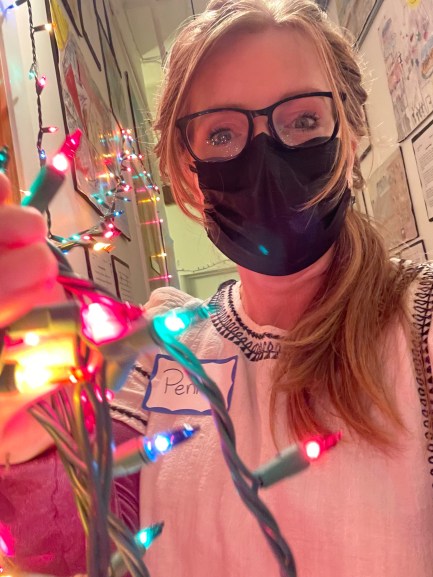
I was at the Theatre early in January as part of a team of volunteers cleaning up and packing away all the end of year holiday decorations and props and getting the facility ready for the new year’s activities.
We were greeted by the volunteer staff who gave us a tour of the facility and shared lots of information about the Theatre and the unique processes. We also watched a video sharing many scenes of various events, activities, and workshops.
Walking around the facility, it was easy to be inspired through the student-created stories and art, as well as the various props, awards, and artwork. It was an inspiring creative space.
The Theatre also holds acting courses and creative expression exploration workshops for various levels. A sign declares, “The first steps to do anything in life are to liberate the limitless possibilities that exist in every human being.”
The workshops are designed to challenge participants to move into imagination and become open to new perspectives. With training, the participant’s intuition and imagination start working together, creating a focus on possibility (not limited by pre-existing bias or belief). Liberating potential and opening up possibility. People can then respond to challenges and issues imaginatively, emotionally, and inspirationally. They are no longer locked in the confines of the factual intellect, but instead have the full range of creative intellect, with new insights.
The Theatre often works with business groups as well. They recognize members of the business community are often paralyzed or held into existing situations thinking they must maintain the structure that currently exists – one which upholds the collective status quo. This is because there is fear of change and an inability to see viable new possibilities. It is often not a natural part of business day to day to look for, probe, and try new expressions. The Theatre programs help to unlock that thinking and explore new possibilities in a safe, communal environment that can then translate out into real-world change.


The organization has an extensive volunteer program – from helping at events and courses/programs to marketing, design, video editing, carpentry, lighting, etc. If you have any passions or interests around theatre, theatre production, teaching expression, etc. – – there is a volunteer opportunity available!
The Theatre also holds monthly open mic nights, often with topics related to current events. Live theater is a perfect place to share conflicting viewpoints because they are expressed between characters on a stage and the audience does not feel threatened by it. Yet this type of open dialog often inspires creative thinking and new perspectives. It allows empathy, understanding, and truth to emerge.
Thurman E Scott believes theater should belong to everyone. That it must test, probe, and struggle to find new expressions, new forms and new ideas that will inspire and uplift the consciousness of our society. Theater can be aspiration-focused. A way of being together that nourishes in each individual the resilience, the hope, the joy, the courage, the focus, and the determination that we each need in order to create the world in which we want to live – both on stage and off. I left the volunteer shift motivated and inspired by the possibilities the Theatre opens to the community!
To read more about the Actors Theatre Workshop and their award-winning program, to donate to support their vision, or to learn about volunteer activities, please visit: Home – The Actors Theatre Workshop
Thank you for joining me on my journey this week!
Penny
Nourishing Hope: God’s Love We Deliver Tackles Illness, Malnutrition, and Hunger in NYC

In the heart of New York City, where the hustle and bustle of urban life often overshadow the struggles of the marginalized, an organization stands as a beacon of hope, combating the trifecta of illness, malnutrition, and hunger.
God’s Love We Deliver, a non-profit organization, has been at the forefront of providing nutritious meals to individuals battling severe illnesses since 1985.
I had the opportunity to volunteer with the organization one blustery early January morning, helping pack hundreds of meals that would be delivered that day. The shift started at 6:30 am and as I made my way down to lower Manhattan, I took notice of this special, quiet, early morning time in the city.
The organization’s headquarters is a large building. We were in the meal packing warehouse section on the first floor. Right from the start the team overseeing the volunteers was extremely well-organized, energetic, friendly, and motivating. With music playing and lots of friendly chatter, we were brought on a mini tour of some key parts of the area we would be working in as the God’s Love We Deliver team shared safety information, process details, expectations, and lots of facts about the organization.
It was a very happy start to the day!


The Nexus of Illness, Malnutrition, and Hunger:
Illness, malnutrition, and hunger form an interlinked web, particularly for vulnerable populations. Individuals facing severe health challenges often experience a compromised immune system, making them more susceptible to malnutrition and hunger. Conversely, malnutrition and hunger can exacerbate existing health conditions, creating a vicious cycle that is difficult to break.

In urban landscapes like New York City, where the cost of living is high, many individuals dealing with chronic illnesses find themselves grappling not only with the physical toll of their conditions but also with financial burdens that limit their access to proper nutrition.
As a result, a significant number of people end up malnourished or hungry, hindering their ability to fight the very illnesses that ail them.
God’s Love We Deliver: A Lifeline for the Afflicted:
God’s Love We Deliver understands the intricate connection between illness, malnutrition, and hunger. Founded during the height of the HIV/AIDS epidemic, the organization initially focused on delivering meals to those affected by this devastating disease. Over the years, its mission expanded to include individuals facing various life-altering illnesses such as cancer, Alzheimer’s, and multiple sclerosis.

The organization’s model is simple yet powerful: volunteers prepare and deliver nutritious, medically tailored meals directly to the doorsteps of clients. These meals are designed to meet the specific dietary needs of each individual, addressing the nutritional challenges associated with their illnesses. God’s Love We Deliver recognizes that proper nutrition is not only a basic human right but also a fundamental aspect of healthcare.
As their website states, “God’s Love seeks to ensure that the medically tailored meal intervention is part of the continuum of healthcare, broadly accessible to those who need it, and always of the highest quality.”
There is no income level or income restrictions to receiving meals. Anyone at any level of income can receive meals. Clients only need a diagnosis of serious illness and have difficulties with activities of daily living.

A Community of Compassion:

The impact of God’s Love We Deliver extends beyond the nutritional support it provides. The organization fosters a sense of community and compassion, ensuring that clients feel seen and cared for in the midst of their health battles.
Volunteers not only deliver meals but also offer a moment of human connection and understanding, reducing the isolation that often accompanies chronic illnesses.
Gods Love We Deliver in Action:
To grasp the enormity of God’s Love We Deliver’s impact, one need only look at the numbers. The organization delivers over 2 million meals annually, serving thousands of clients across all five boroughs of New York City.
The meals are crafted in collaboration with registered dietitians and chefs, ensuring that they not only nourish the body but also bring joy to those in need.

Moreover, the organization has adapted to the changing landscape of healthcare, expanding its services to include nutrition counseling and educating clients on how to make healthy choices within the constraints of their medical conditions.
God’s Love We Deliver’s commitment to holistic well-being is a testament to its understanding that addressing illness, malnutrition, and hunger requires a multifaceted approach.
They partner with hospitals, health plans and other providers to address the needs of patients. And they engage in policy advocation at local, state and national levels.
During our shift, we packed over 3,500 meals, including vegetarian options. The organization delivers over 13,000 meals a day.
Properly gloved, hair-cap fitted, and masked, we were each assigned stations where we placed Entrees, Soup, Salad and Dessert into packing bags. Each bag went to an individual. Individuals made specific choices for their meals online ahead of time and could ensure their meals met their dietary needs, such as low salt or sugar, and other restrictions. Each client’s needs were printed on a form, and we were given stacks of forms with specific meals to pack.


After organizing the meals for the individuals, they were packed into delivery boxes for specific trucks that were assigned specific drop-offs and neighborhoods throughout the 5 Boroughs of NYC. While our shift focused on organizing lunches and dinners, clients could also choose breakfasts. Over 10,000 volunteers a year help the organization.

I am motivated for a great day!
It was a very busy and rewarding experience!
Conclusion:
In the face of illness, malnutrition, and hunger, God’s Love We Deliver serves as a shining example of compassion, resilience, and community support. By providing nourishing meals tailored to the specific needs of individuals battling severe illnesses, the organization not only addresses immediate nutritional challenges but also contributes to the overall well-being and dignity of its clients.
As we continue to navigate the complexities of healthcare, God’s Love We Deliver stands as a reminder that a simple act of kindness, like delivering a nutritious meal, can have a profound impact on those facing the toughest of times.
If you’d like to learn more about God’s Love We Deliver, would like to volunteer, would like to sign up for meals, or make a donation, please visit their site at: www.glwd.org
XO XO Penny


Post-pandemic Call to Community: Volunteering to Build Hope
Organization: Habitat for Humanity, Tucson: https://www.habitattucson.org/
Location: Tucson, AZ (USA)

We are still collectively emerging from the pandemic and many of us feel a sense of uncertainty… an unsettling. The ways of life we took for granted were shaken and we are struggling collectively to adapt to new patterns of work (where, when, how), community (sharing public space such as shopping & restaurants), family (holidays, celebrations, trips), and even a realignment of what we want for our lives and our families. In a way, we have been shaken awake from a life we may not have questioned enough. And we are not yet settled into what will be.
Adding to our sense of vulnerability are big-world challenges such as concern about the economy and inflation, the war in Ukraine, new rounds of COVID, seasonal flu. There may sense we have lost the control we thought we had over our lives and feel more vulnerable to the world’s ills.
But that’s not the full story of our collective experience. It does not reflect what we are capable of building as we emerge post-pandemic.
We need to rebuild and reclaim our agency over our lives. To work through the trauma of the past few years which has left us anxious.
We can do this by focusing on what is ours to do in the moment. We can ask ourselves, what is right in front of us, in the smaller spaces of life? Where can we have impact in our families? Our work? Our communities?
I’m not talking about anything big or splashy. There is magic in the subtle and the ordinary. We just need to tap into that energy. One such avenue is volunteering.
Volunteering is personally empowering and socially productive. Spending even a short amount of time surrounded with people who are dedicated to bettering the world, and participating with others in community to make a difference for others, strengthens our hope muscles and lessens our anxiety. It also boost our connection to others. We are part of a whole.
Volunteering even just one time, for a few hours, can give you a mental and emotional boost, while also helping members of the community in need. There is magic in working together with others focused on kindness…. and in what happens when you do that. It’s energizing.
It’s also a conscious choice to act, so it builds confidence and agency. The word volunteer comes from the Latin “voluntaries” meaning “willing or of one’s own choice.” Volunteering is a conscious decision to act. You choose to make the effort to volunteer. This is empowering!
Even when I travel, I look for an organization where I can volunteer. It is one of the best ways to get to know the local community. Instead of remaining at a tourist level, it is exciting to dig deeper and be part of something that sustains the local people.
Some types of organizations are better suited for one-time visitors. Habitat for Humanity is a great choice! They have chapters in every US State and 70 countries around the world. Habitat focuses on building or repairing homes for low-income families and they need regular teams of volunteers for a variety of projects.


My husband and I traveled to Tucson, Arizona, to visit his father over Thanksgiving weekend, and I spent one day volunteering with Habitat for Humanity Tucson’s “A Brush With Kindness” division.

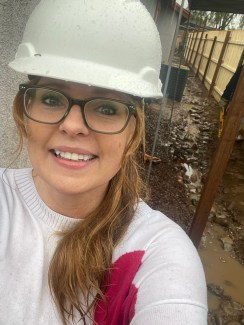
A Brush with Kindness partners with low-income residents who struggle to maintain the exterior of their homes, allowing them to reclaim their homes with pride and dignity.
They help with outside painting, system repairs to electrical and heating, tree trimming and removal, repairs on roofing, siding, doors, and windows.
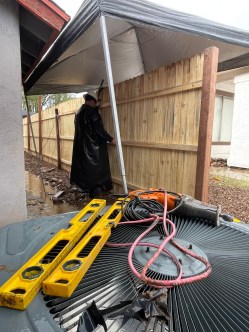
On this particular day we were there to install fences and gutters.
Tucson ended up experiencing an unusual day of rain so we did not get to do the gutters, so we focused on installing the fencing.

I was one of about 10 volunteers that day. I met some inspiring people – among them a female long-haul truck driver who shared interesting stories of life on the road, a retired school principal who traveled the world on her bicycle and shared wonderful stories of towns visited around the world, and a seminary student getting ready to embark on the next phase of his journey.

Our team was across all ages – from college students to retirees. Most were local so I learned a lot about the local culture, local favorite hidden restaurants and activities, and about local, little-known hiking spots. Things I may never have learned had I remained in “tourist” mode and not volunteered for the day.
I have volunteered with several Habitat for Humanity chapters in a handful of States and love the organization. The site leaders are always very helpful, ensure you are properly trained and following safety protocols, and also ensure you are engaged and busy. It is always a wonderful experience!

Habitat for Humanity Tucson builds about 15 – 25 houses a year. Applicants undergo an application process where they are approved based on their income, willingness to partner to build the house (sweat equity) and need.
Families have to put in 200 hours of sweat-equity per adult per home. The typical home is about 1,200 sq ft, and is often one story, with 3 bedrooms and 1 ½ bathrooms. They will vary from that depending on location/need.
Volunteer activities vary based on needs of the day but can be tailored to each participant’s abilities so everyone has something meaningful to do. This makes it great for families (parents and adult children, siblings, etc.) and all different ages (teens through retirees). Please note – there are minimum age requirements so check your local Habitat for details.
Interested in finding a Habitat for Humanity near you so you can volunteer?
Check out https://www.habitat.org/ and you can search by your State.
Interested in learning more about Habitat for Humanity Tucson and their Brush with Kindness division? Check out: https://www.habitattucson.org/
Thank you for journeying with me! XO – Penny